
Satellite Technology for Science
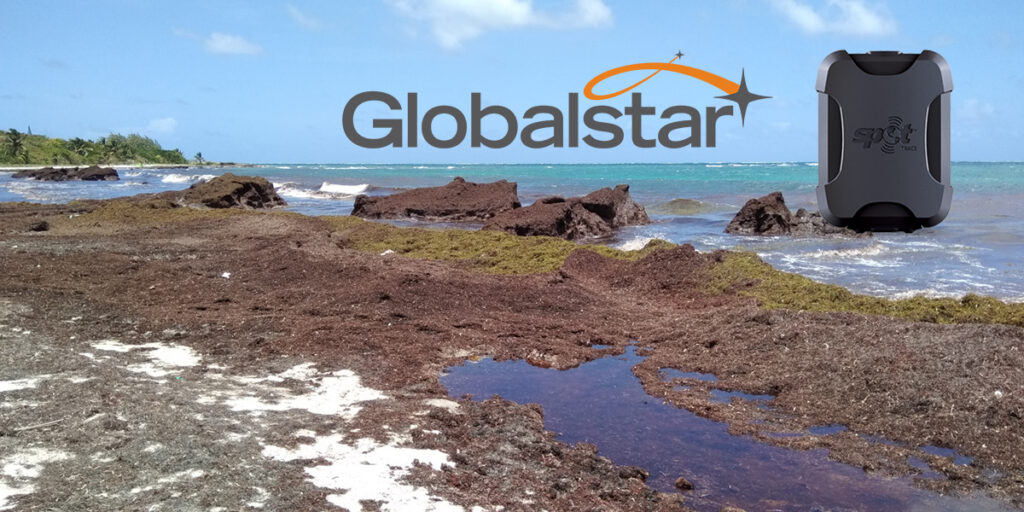
It is on Globalstar’s SPOT Trace beacons that the Royal Netherlands Institute for Sea Research and Utrecht University have decided to rely to aid them in their research on sargassum (brown algae), which kills coral, impacts fishing, and forces beach closures.
Indeed, thanks to SPOT beacons from Globalstar Europe Satellite Services Ltd, which specializes in satellite messaging and emergency notifications, researchers are trying to better understand this phenomenon by tracking the movement of these algae from their natural environment, the North Atlantic, to the Caribbean and the Southeastern United States. To do this, they equip floating buoys with SPOT Trace satellite trackers, which are then placed on the North Equatorial Current.
By analyzing this data transmitted by the beacons, biologists are trying to understand where these algae originate and how their environment is changing, in order to take effective measures.
Generally, maritime research projects are carried out using large drifting buoys, but upon discovering that the University of Florida was using SPOT Trace satellite beacons for their maritime research, they realized it was a solution that would more realistically mimic the drift of sargassum on the sea surface.
A More Cost-Effective Solution
This solution is all the more beneficial considering the accessible price and size of the SPOT Trace beacons. This is why they can equip multiple buoys with a small tracker (7 x 5 cm) that features a GPS receiver, a simple transponder, and a motion sensor. Thanks to Globalstar’s numerous Low Earth Orbit (LEO) satellites and the long battery life of the beacons, the research team benefits from precise tracking.
By analyzing the first data transmitted by the satellite trackers, the researchers gained important information about the movement of the sargassum in this region. Since climate is an important issue nowadays, we must have a better understanding of our environment and how the oceans are changing. Hundreds of SPOT Trace GPS beacons are therefore now being used in oceanographic studies worldwide. And the scientific use of this equipment is expected to increase because it is a reliable technology. Moreover, the scientific and technological organization, the NATO Centre for Maritime Research and Experimentation, as well as the Italian National Research Council also use Globalstar’s SPOT Trace.